

There’s something quietly comforting about rolling up your sleeves to create something fresh and warm in the kitchen. These delightful rolls come together with a few straightforward steps, making them perfect for a leisurely weekend brunch or a special treat on a weeknight. They’re also an excellent choice for gatherings or simply enjoying in quiet moments with a cup of tea or coffee. Let’s dive into this recipe together.
Why You’ll Love This Lemon Sweet Rolls
These lemon sweet rolls are both easy and reliable, offering a comforting balance of sweetness and citrus. The straightforward preparation allows anyone to bring a slice of homemade goodness into the kitchen without overwhelming complexity. The flavor of lemon shines through, making them a bright addition to any mealtime. You’ll find practical everyday value in these rolls, perfect for breakfasts, snacks, or even dessert.
Kitchen Tools You’ll Need
- Mixing bowl
- Whisk
- Rubber spatula
- Rolling pin
- Baking sheet
- Parchment paper
- Plastic wrap
- Small saucepan
Ingredients
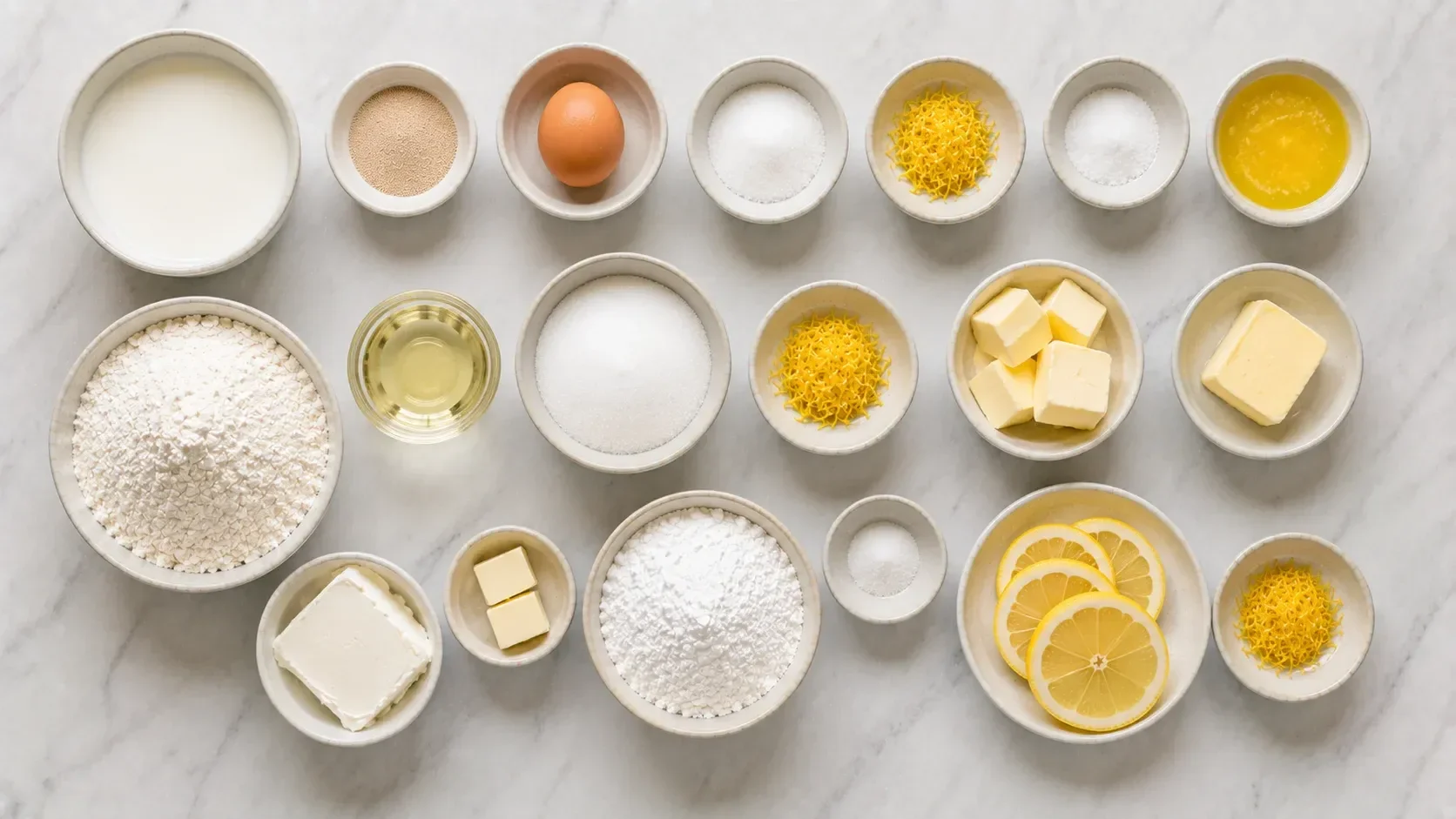
- 1 ½ cups whole milk, warmed to 110°F
- 2 ¼ teaspoons instant yeast
- 1 large egg, room temperature
- 3 tablespoons granulated sugar
- 2 teaspoons lemon zest
- ½ teaspoon salt
- 3 tablespoons unsalted butter, melted
- 3½ to 4¼ cups bread flour or all-purpose flour, spooned and leveled
- Olive oil or butter for greasing the bowl
- ¾ cup granulated sugar (for filling)
- 1½ tablespoons lemon zest (for filling)
- 5 tablespoons unsalted butter (for filling)
- 1 tablespoon unsalted butter (for greasing)
- 4 ounces full-fat cream cheese, brick style (for glaze)
- 2 tablespoons unsalted butter (for glaze)
- 1 ¼ cups powdered sugar (for glaze)
- Pinch of salt (for glaze)
- 2 tablespoons lemon juice (for glaze)
- Lemon slices (for garnish)
- Lemon zest (for garnish)
How to Make Lemon Sweet Rolls
Step 1. Begin by warming the whole milk to about 110°F. This temperature is crucial for activating the instant yeast, ensuring your rolls rise well. Once the milk is warm, sprinkle the instant yeast over it and let it sit for about five minutes. You’ll know it’s ready when the mixture appears frothy, a sign that the yeast is alive and working.
Step 2. In a separate mixing bowl, combine the large egg, 3 tablespoons of granulated sugar, 2 teaspoons of lemon zest, and ½ teaspoon of salt. Use a whisk to blend these ingredients until they are well combined. The butter will be added shortly, but for now, focus on creating a uniform mixture that will incorporate smoothly.
Step 3. Pour the activated yeast mixture into the bowl with the egg mixture. Then add the melted unsalted butter to the mixture. Use a spatula to gently fold these components together until everything is weaved into a cohesive blend, forming the base of your sweet roll dough.
Step 4. It’s time to gradually add the flour. Begin by incorporating 3½ to 4¼ cups of bread flour or all-purpose flour, spooned and leveled. Start with a portion of the flour and stir until the dough begins to pull away from the sides of the bowl. You’re aiming for a soft dough, so keep an eye on its consistency as you add flour.
Step 5. Once the dough has formed, transfer it to a lightly floured surface for kneading. Knead for about 5–7 minutes until the dough feels smooth and elastic. You’ll notice the dough becoming more cohesive and a bit bouncier as you work it. This is a positive sign that the gluten structure is developing, which contributes to the fluffy texture of the rolls.
Step 6. Lightly grease a bowl with olive oil or butter, and place your kneaded dough in it, turning to coat it completely. Cover the bowl with plastic wrap and allow the dough to rise in a warm place until it doubles in size—this may take about an hour. The dough should look fluffy and puffy when it’s ready, signaling it has risen enough.
Step 7. Once the dough has risen, punch it down gently to release some of the air. Transfer the dough back to a floured surface. Then roll it out into a rectangle that’s about ¼-inch thick. Try to maintain an even thickness for uniform baking. This is where your rolls will start to take shape.
Step 8. Prepare the filling by melting the 5 tablespoons of unsalted butter. Brush this melted butter over the rolled-out dough. In a bowl, combine ¾ cup of granulated sugar and 1½ tablespoons of lemon zest, and sprinkle this mixture evenly over the buttered dough. You’ll enjoy the way the scents mingle as you layer the flavors.
Step 9. Starting from one long edge, carefully roll the dough into a log shape. Try to keep it tight as you go, ensuring that the filling stays intact. When you reach the end, pinch the seams gently to seal. This will help keep the filling inside as the rolls bake.
Step 10. Preheat your oven according to your method of choice, ideally at around 375°F. Grease a baking sheet with 1 tablespoon of unsalted butter. Slice the rolled dough into equal pieces, about 1 to 2 inches wide, and place them cut side up on the prepared baking sheet. Leave some space between each piece to allow for expansion as they bake.
Step 11. Cover the rolls with a clean cloth and let them rise again for about 30 minutes. You’re looking for the rolls to puff up a bit more. When they do, you’ll see some nice volume from the dough. It’s a simple but effective way to ensure they remain airy after baking.
Step 12. Once they’ve risen, bake the rolls in your preheated oven until they are golden brown on top, about 20–25 minutes. Keep an eye on the color change, because the visual doneness will indicate when they are ready. The rolls should feel soft and spring back slightly when touched.
Step 13. While the rolls are cooling, prepare the glaze. In a small saucepan, melt the 4 ounces of full-fat cream cheese with 2 tablespoons of unsalted butter. Stir until smooth and creamy. This glaze will provide a luscious finish to the rolls once they’re cool enough to handle.
Step 14. Transfer the melted mixture to a mixing bowl. Add the 1¼ cups of powdered sugar, a pinch of salt, and 2 tablespoons of lemon juice. Whisk these together until smooth, adjusting the glaze’s consistency to your liking. It should pour easily but still hold onto the rolls when drizzled.
Step 15. Drizzle the glaze over the warm rolls, allowing it to soak in and enhance their flavor. If desired, garnish with lemon slices and a sprinkle of lemon zest for an attractive presentation. The bright zest offers a refreshing touch visually, highlighting the rolls’ citrus essence.

Serving Suggestions
These lemon sweet rolls are versatile and can be enjoyed in many ways throughout the day. Serve them warm for breakfast, and let their sweet aroma fill your kitchen. They also make delightful snacks for the family, perfect for enjoying alongside a cup of tea or coffee. If you’re hosting, consider offering them as part of a dessert spread. Leftover rolls can be stored and enjoyed later, retaining their comforting charm.
Pro Tips for Best Results
- Be gentle when punching down the dough after the first rise; you don’t want to deflate it too much.
- Ensure the milk is warm, not hot, to prevent killing the yeast.
- Keep an eye on the rolls while baking to avoid over-browning.
- If your kitchen is too cool, consider placing the dough in a turned-off oven with the light on to encourage rising.
- For a thicker glaze, add powdered sugar gradually until you reach the desired consistency.
Common Mistakes to Avoid
- Not activating the yeast properly: If you don’t allow the yeast to bloom or use milk that’s too hot, the rolls may not rise. Always keep the milk within the required warm temperature.
- Not kneading enough: Insufficient kneading prevents the dough from developing the necessary gluten structure. Aim for a smooth, elastic feel after kneading.
- Skipping the second rise: This step is crucial for achieving light, airy rolls. Don’t rush it—allow the dough to rise until it has visibly puffed up.
- Overbaking the rolls: Keep watch in the last few minutes to avoid drying them out. They should be golden but still soft.
- Pouring glaze on too hot: Allow the rolls to cool slightly before adding glaze, or it may simply run off and not adhere well.
- Not using enough flour when rolling: Too little flour can cause the dough to stick. Dust your work surface adequately to ease the rolling process.
Variations & Substitutions
For a different flavor profile, consider adding cinnamon to the filling along with the lemon zest, creating a delightful lemon-cinnamon fusion. Alternatively, you could swap in orange zest for a citrus variation. If making for a crowd, feel free to double the recipe to ensure everyone can enjoy these delicious rolls.
Storage & Reheating
Store any leftover rolls at room temperature in an airtight container for up to two days. To keep them fresh for a longer period, you can refrigerate them, where they should last up to a week. If you want to preserve them further, consider freezing the unglazed rolls before baking. For reheating, use an oven at a low temperature to maintain their soft texture, or microwave for a quick warm-up, but be careful not to overheat, as this can dry them out.
Frequently Asked Questions
Can I make this recipe ahead of time?
Yes, you can prepare the dough ahead of time and refrigerate it after the first rise. In this case, let it come to room temperature before shaping and proceeding with the second rise and baking.
How long does it last in the fridge?
These rolls can last in the refrigerator for up to a week. Store them in an airtight container to keep them fresh and moist.
Can I freeze this recipe?
Absolutely! These rolls can be frozen either after baking or before baking. If freezing unbaked, you can shape them and then freeze until firm, then transfer to a bag. Bake from frozen, adding a few extra minutes to the bake time.
What can I substitute for one ingredient?
If you’re out of whole milk, you can use 2% milk or even a dairy-free milk alternative, although the texture may vary slightly.
Why didn’t my recipe turn out as expected?
Common issues might include improper yeast activation, incorrect oven temperature, or not allowing enough time for rising. Ensure you’re following the instructions and measuring accurately for the best results.
Final Thoughts
Making lemon sweet rolls offers a comforting experience that warms the kitchen and the heart. The straightforward steps serve as a gentle reminder of the joy found in simple, homemade treats. As you enjoy these rolls, take a moment to appreciate the satisfaction that comes with creating something from scratch. They’ll surely brighten your day, bringing a bit of sunshine into each bite.

Lemon Sweet Rolls
Ingredients
Dough Ingredients
- 1.5 cups whole milk, warmed to 110°F Crucial for activating the yeast.
- 2.25 teaspoons instant yeast
- 1 large egg, room temperature
- 3 tablespoons granulated sugar For the dough.
- 2 teaspoons lemon zest Adds flavor to the dough.
- 0.5 teaspoon salt
- 3 tablespoons unsalted butter, melted
- 3.5-4.25 cups bread flour or all-purpose flour, spooned and leveled Adjust based on dough consistency.
- Olive oil or butter for greasing the bowl
Filling Ingredients
- 0.75 cup granulated sugar For filling.
- 1.5 tablespoons lemon zest For filling.
- 5 tablespoons unsalted butter, melted For filling.
- 1 tablespoon unsalted butter For greasing before filling.
Glaze Ingredients
- 4 ounces full-fat cream cheese, brick style
- 2 tablespoons unsalted butter
- 1.25 cups powdered sugar
- Pinch of salt
- 2 tablespoons lemon juice
- Lemon slices for garnish
- Lemon zest for garnish
Instructions
Preparation
- Warm the whole milk to about 110°F.
- Sprinkle the instant yeast over the warm milk and let it sit for about five minutes until frothy.
- In a mixing bowl, combine the egg, sugar, lemon zest, and salt, whisking until well combined.
- Pour the activated yeast mixture into the egg mixture and add melted butter, folding until cohesive.
- Gradually add 3.5 to 4.25 cups of flour, stirring until the dough pulls away from the sides of the bowl.
- Transfer the dough to a lightly floured surface and knead for 5–7 minutes until smooth and elastic.
Rising and Rolling
- Grease a bowl with olive oil or butter, place the dough inside, cover with plastic wrap and let rise until doubled, about 1 hour.
- Punch down the dough gently, transfer it to a floured surface, and roll out into a rectangle about ¼-inch thick.
Filling and Baking
- Melt 5 tablespoons of butter and brush it over the rolled-out dough.
- Mix the sugar and lemon zest for the filling, then sprinkle over the buttered dough.
- Tightly roll the dough into a log from one long edge, pinching the seams to seal.
- Preheat the oven to around 375°F, grease a baking sheet with 1 tablespoon of butter, and slice the rolled dough into pieces.
- Cover the rolls with a cloth and let rise again for about 30 minutes.
- Bake the rolls until golden brown on top, about 20–25 minutes.
Glazing
- Melt the cream cheese and butter together, then whisk in the powdered sugar, salt, and lemon juice until smooth.
- Drizzle the glaze over the warm rolls and garnish with lemon slices and zest.