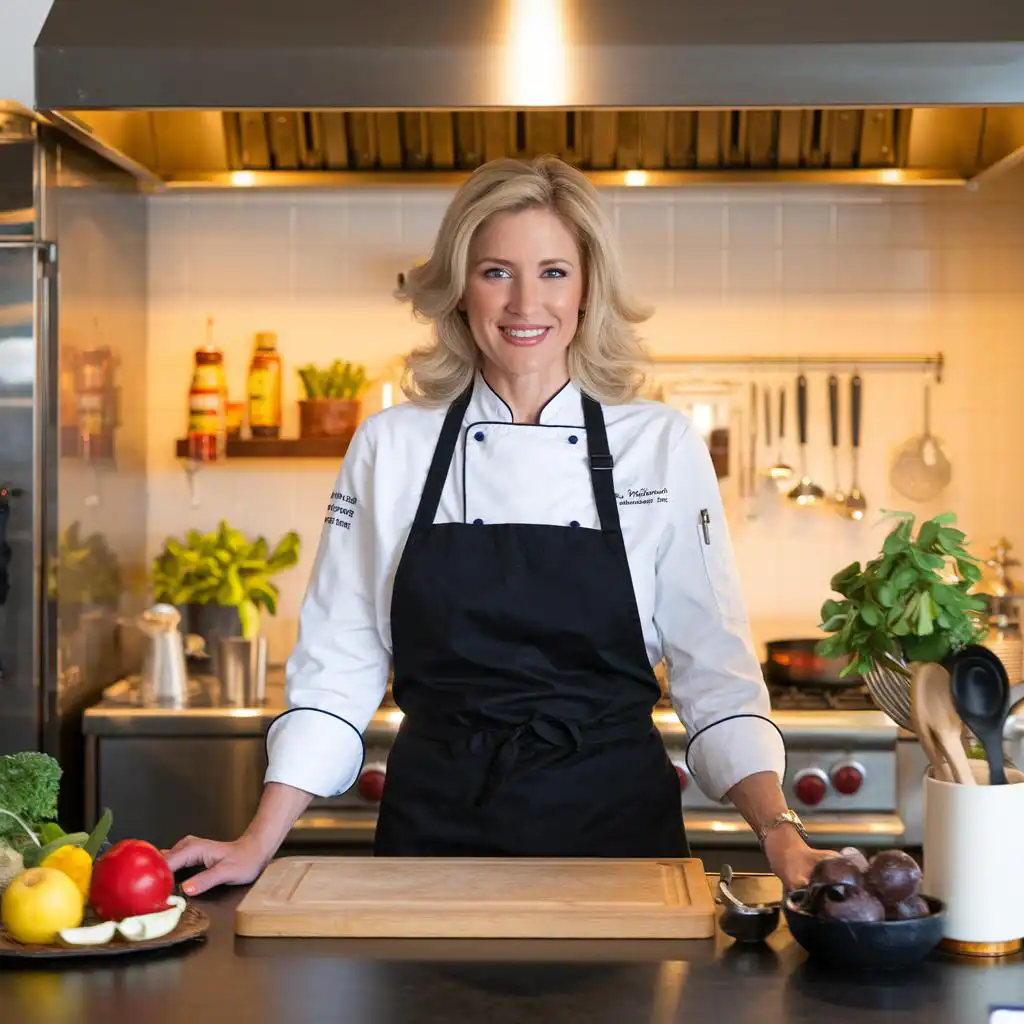

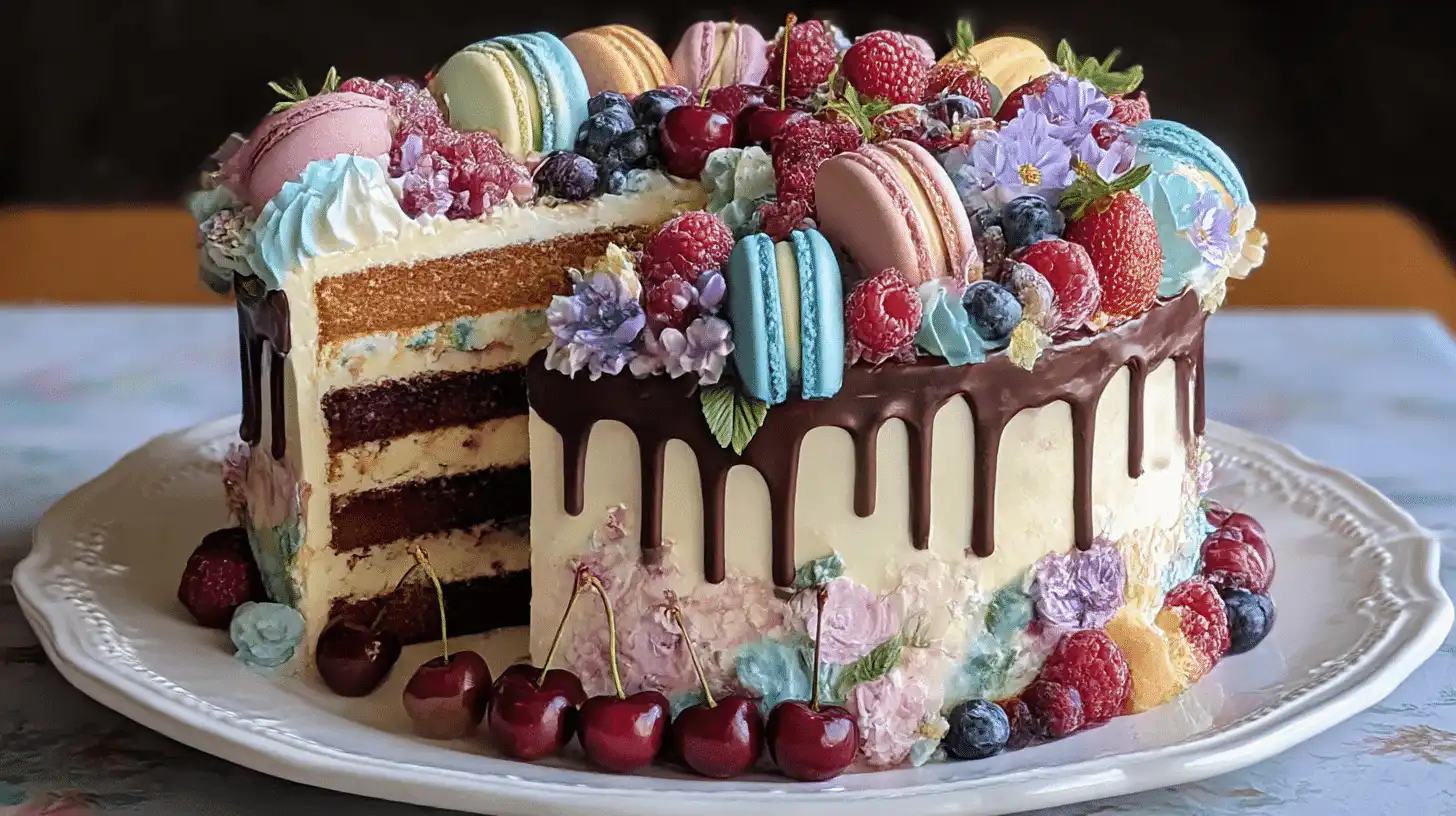
Birthday cake has always been more than dessert for me—it’s a symbol of love, joy, and togetherness. Hi, I’m Amanda, and through BeamRecipes, I share recipes that make real-life celebrations special without the stress. Cooking has been my way of creating comfort since childhood afternoons in the kitchen, and now it’s the heart of my brand. BeamRecipes is built on the belief that food should be simple, approachable, and full of meaning. Every recipe here carries a story, and this birthday cake is one I’m proud to pass on to your table and your family’s celebrations.
Why This Birthday Cake Works (250–300 words)
A Cake That Always Delivers
The beauty of this birthday cake recipe is its reliability. It produces a soft, fluffy crumb and a tender bite every time. No fancy tools are needed—just bowls, a whisk, and love.
Moist Texture Without Being Heavy
The secret lies in the balance of butter and buttermilk. Butter adds richness, while buttermilk keeps the crumb light and tender. This combination ensures the cake is indulgent but never dense.
Frosting That Spreads Like a Dream
With a creamy buttercream frosting, the cake isn’t just delicious but also forgiving. Even if your spreading isn’t perfect, swirls of frosting make it look beautifully homemade.
Built for Real Life Celebrations
This cake is strong enough to hold candles, decorations, or sprinkles without collapsing. Whether it’s a kid’s party or an elegant dinner, it stands tall and proud, ready for the spotlight.
Ingredients & Simple Swaps
When making a birthday cake, the ingredients you choose set the stage for how moist, fluffy, and flavorful the final result will be. Each component plays an important role, and knowing the possible swaps makes this recipe flexible for real life.
Core Ingredients
- 2 ½ cups all-purpose flour – the backbone of the cake, giving it structure.
- 2 ½ tsp baking powder + ½ tsp baking soda – work together to create lift and lightness.
- ½ tsp salt – balances sweetness and deepens flavor.
- 1 cup unsalted butter, softened – adds richness and tenderness.
- 2 cups granulated sugar – sweetens while helping the cake hold moisture.
- 4 large eggs, room temperature – bind the batter and add stability.
- 1 tbsp vanilla extract – provides warm, aromatic flavor.
- 1 cup buttermilk – ensures a soft, tender crumb.
For the Frosting
- 1 cup unsalted butter, softened
- 4 cups powdered sugar
- ¼ cup heavy cream – makes frosting silky and spreadable.
- 2 tsp vanilla extract
Optional Swaps
- Buttermilk substitute: Mix 1 cup milk with 1 tbsp vinegar or lemon juice—let sit 5 minutes.
- Frosting flavor twist: Stir in cocoa powder for chocolate, or switch to almond extract for a nutty variation.
- Gluten-free option: A 1:1 gluten-free flour blend works beautifully without altering flavor.
Step-by-Step Instructions
1. Preheat & Prepare
Set your oven to 350°F. Grease and flour two 9-inch round pans, then line the bottoms with parchment for easy release.
2. Mix Dry Ingredients
In a medium bowl, whisk together flour, baking powder, baking soda, and salt. This ensures even distribution of leavening agents.
3. Cream Butter & Sugar
In a large bowl, beat butter and sugar on medium speed until pale and fluffy, about 3 minutes. This step traps air, giving the cake its tender crumb.
4. Add Eggs & Vanilla
Crack in eggs one at a time, beating well after each addition. Stir in vanilla extract. The mixture should look creamy and smooth.
5. Alternate Wet & Dry
With the mixer on low, add dry ingredients in three parts, alternating with buttermilk. Always begin and end with dry ingredients. This keeps the batter stable and prevents overmixing.
6. Bake
Divide batter evenly between pans and smooth tops. Bake for 25–30 minutes, or until a toothpick inserted into the center comes out clean. Let cakes cool in pans for 10 minutes before transferring to wire racks. Cool completely before frosting.
7. Make Frosting
Beat butter on high until creamy. Gradually add powdered sugar, alternating with splashes of cream. Mix in vanilla and whip until frosting is fluffy and spreadable.
8. Assemble
Place one cooled cake layer on a serving plate. Spread frosting generously across the top. Add the second layer, then cover the entire cake with frosting. Decorate with sprinkles, fresh fruit, or even candles to make it celebration-ready.ad frosting, top with second layer, and frost outside. Decorate with sprinkles or fruit.
Why This Recipe Works
Baking isn’t magic, but sometimes it feels that way—especially when a cake rises tall, stays moist, and slices beautifully. This birthday cake works so well because each step and ingredient is designed with purpose.
The Magic of Buttermilk
Buttermilk isn’t just there for flavor—it’s the science behind the cake’s texture. Its gentle acidity reacts with baking soda, creating tiny air pockets that make the cake tender and light without being crumbly.
Room-Temperature Ingredients
Softened butter and room-temperature eggs blend smoothly, creating an even batter. Cold ingredients can cause separation, leading to uneven texture or dense patches. Taking 30 minutes to let your ingredients warm slightly makes all the difference.
The Right Flour-to-Fat Ratio
Flour gives structure, while butter provides tenderness. Too much flour creates a dry cake, while excess butter makes it greasy and heavy. This recipe strikes the perfect balance for softness with enough stability to hold frosting and decorations.
Creaming Butter & Sugar
Beating butter with sugar does more than combine them—it traps air into the mixture. Those air bubbles expand in the oven, creating a fine, fluffy crumb. Skipping or rushing this step is one of the biggest cake mistakes.
Cooling Before Frosting
It’s tempting to frost right away, but patience pays off. A warm cake melts buttercream, turning it into a slippery mess. Letting layers cool completely ensures smooth, creamy swirls that stay in place.
Together, these little details add up to one big reward: a cake that tastes as good as it looks and stays memorable long after the candles are blown out.
Variations & Adaptations
A classic birthday cake is always welcome, but sometimes you want to add a twist. Here are simple variations that keep the recipe approachable while giving you plenty of room to get creative.
Chocolate Birthday Cake
Swap ½ cup of flour for unsweetened cocoa powder. This deepens the flavor and gives you a rich, indulgent chocolate cake without altering the texture.
Rainbow Layers
Divide the batter into several bowls and stir in food coloring. Bake the layers separately and stack them in bright, cheerful order. When sliced, the cake reveals a rainbow surprise that’s perfect for kids’ parties.
Cupcake Option
Turn this recipe into cupcakes by baking in lined muffin tins for 18–20 minutes. They’re easier to serve at parties and fun to decorate individually with sprinkles or candy toppers.
Vegan Birthday Cake
With a few swaps, this recipe easily becomes vegan. Use dairy-free butter, plant-based milk with a splash of vinegar, and flax eggs (1 tbsp ground flax + 3 tbsp water per egg). The result is still moist, flavorful, and perfect for celebration.
Seasonal Touches
Add lemon zest for a spring birthday, warm spices like cinnamon in fall, or fresh berries folded into the batter in summer. This cake adapts beautifully to the season.
Common Mistakes & Fixes
Even the best bakers slip up sometimes, but most mistakes can be fixed—or prevented.
Overmixing the Batter
Too much mixing develops gluten, leading to a dense, chewy cake. Stir just until the dry ingredients disappear. A few small lumps are okay.
Uneven Layers
Eyeballing batter often leads to one layer taller than the other. Use a kitchen scale or measuring cup to divide the batter evenly between pans.
Dry Cake
If your cake turns out dry, chances are it was overbaked. Start checking with a toothpick at 25 minutes. It should come out with a few moist crumbs, not clean.
Frosting Slips Off
Trying to frost warm cake is a recipe for disaster. Always cool completely, and if your kitchen is warm, pop layers in the fridge for 10–15 minutes before frosting.
Crumbly Frosting Finish
If crumbs get caught in your frosting, apply a thin “crumb coat” first. Chill, then add the final layer of buttercream for a smooth, polished look.
FAQ
Can I make this cake ahead?
Yes. Bake the layers a day in advance, wrap tightly in plastic, and store at room temperature. Frost just before serving for freshness.
Can I freeze birthday cake?
Absolutely. Wrap slices in plastic and foil, then freeze for up to 3 months. Thaw overnight in the fridge before enjoying.
Can I double this recipe?
Yes, it doubles well for a sheet cake or large gathering. Just extend the baking time slightly and check for doneness carefully.
How do I get bakery-style smooth frosting?
Use an offset spatula for even spreading, and chill the cake briefly before adding the final frosting layer. This keeps crumbs locked in place.
What’s the best way to store leftovers?
Keep the cake covered at room temperature for up to 2 days, or refrigerate for up to 5. Always bring it back to room temp before serving for the best flavor.
notes Final Encouragement
Every birthday cake tells a story—of laughter, milestones, and love gathered around the table. It doesn’t matter if your layers lean a little or if the frosting isn’t picture-perfect. What people will remember is the singing, the wish made over flickering candles, and the joy of sharing something homemade. Baking this cake isn’t about perfection—it’s about connection. It’s about watching someone’s eyes light up when you bring it to the table. It’s about knowing that your effort, however small, created a moment that matters. So take your time, enjoy the process, and remember: a birthday cake isn’t just dessert—it’s a memory in the making.
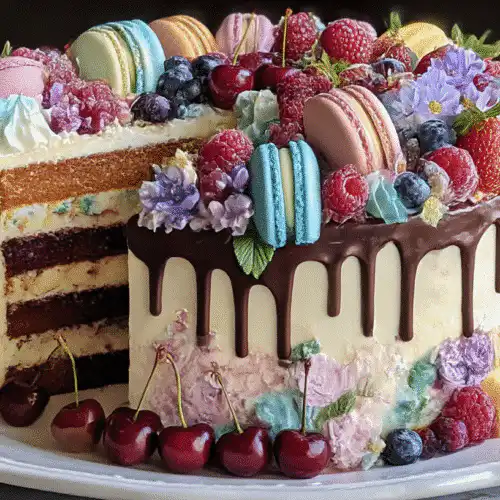
Classic Birthday Cake
Equipment
- Two 9‑inch round cake pans
- Electric mixer or stand mixer
- Spatula
Ingredients
Cake Batter
- 2.5 cups all-purpose flour
- 2.5 tsp baking powder
- 0.5 tsp baking soda
- 0.5 tsp salt
- 1 cup unsalted butter softened
- 2 cups granulated sugar
- 4 large eggs room temperature
- 1 tbsp vanilla extract
- 1 cup buttermilk
Frosting (Buttercream)
- 1 cup unsalted butter softened
- 4 cups powdered sugar
- 0.25 cup heavy cream
- 2 tsp vanilla extract
Instructions
- Preheat oven to 350°F (175°C). Grease and flour two 9‑inch round pans, then line the bottoms with parchment paper.
- In a medium bowl, whisk flour, baking powder, baking soda, and salt.
- In a large bowl, beat softened butter and sugar until pale and fluffy, about 3 minutes.
- Add eggs one at a time, beating well after each. Stir in vanilla extract.
- Alternate adding dry ingredients and buttermilk to the butter‑sugar mixture, beginning and ending with dry ingredients. Mix on low until just combined.
- Divide batter evenly between pans and smooth tops. Bake for 25‑30 minutes or until a toothpick inserted comes out clean. Let cakes cool in pans for 10 minutes, then transfer to wire racks to cool completely.
- To make the frosting, beat butter until creamy. Gradually add powdered sugar, alternating with splashes of cream. Mix in vanilla and whip until smooth and fluffy.
- Place first cake layer on a serving plate. Spread frosting on top. Add second layer and frost the top and sides. Decorate with sprinkles, fruit, or candles as desired.