

There’s something comforting about taking the time to create a delicious treat from scratch. These soft sourdough donuts come together easily and are perfect for many occasions, whether it’s a cozy weekend morning, an intimate family gathering, or an afternoon snack. Their light texture and subtle flavors make them a delightful addition to any moment. With a straightforward process, you’ll find this recipe is as enjoyable to make as it is to savor.
Why You’ll Love This Soft Sourdough Donuts with a Light Texture
This recipe is all about ease and reliability in your kitchen. With a balanced flavor that feels comforting but isn’t overwhelming, these soft sourdough donuts offer practical everyday value. They’re perfect for satisfying sweet cravings any time of day, making them a great stand-by recipe. You can enjoy the benefits of working with sourdough without complicated steps or ingredients, ensuring you can whip them up with confidence.
Kitchen Tools You’ll Need
- Mixing bowl
- Whisk
- Rolling pin
- Biscuit cutter or round cookie cutter
- Deep frying pot or pan
- Slotted spoon
- Cooling rack
Ingredients
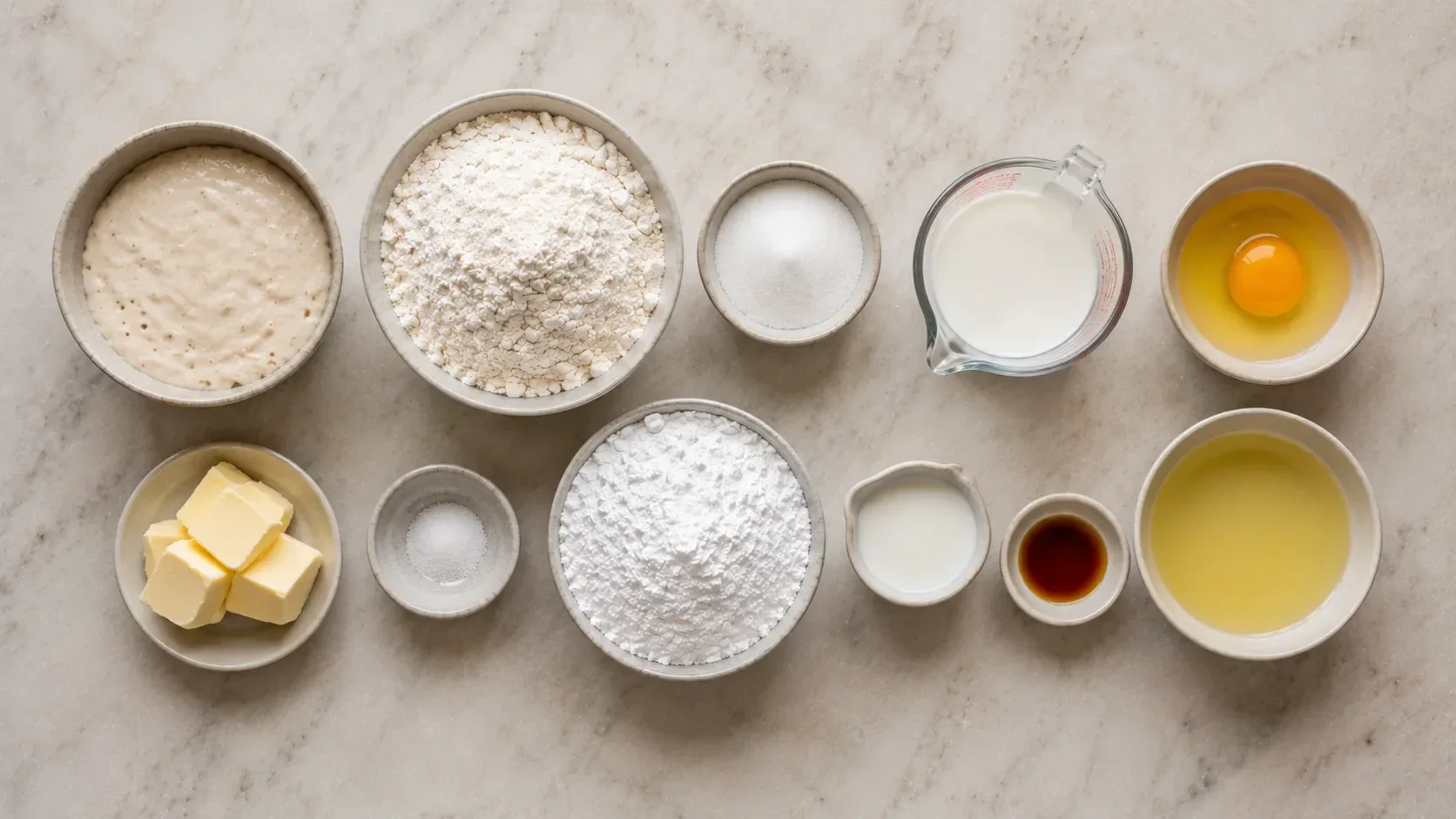
- 120g active sourdough starter (provides leavening and flavor)
- 240g all-purpose flour (structure and texture)
- 30g granulated sugar (sweetness)
- 60ml whole milk (moisture)
- 1 large egg (binding and richness)
- 40g unsalted butter (tenderness and flavor)
- 1 teaspoon salt (enhances overall flavor)
- Neutral cooking oil for frying (for frying)
- 150g powdered sugar (for glaze, adds sweetness)
- 2 tablespoons whole milk (for glaze, moisture)
- 1 teaspoon vanilla extract (for glaze, enhances flavor)
How to Make Soft Sourdough Donuts with a Light Texture
Step 1. In a mixing bowl, combine the active sourdough starter, all-purpose flour, granulated sugar, and salt. Use a whisk to ensure these dry ingredients are blended evenly. This step is important to avoid any clumps of sugar or flour, which would affect the texture of your donuts.
Step 2. In a separate container, whisk together the whole milk, large egg, and melted unsalted butter until well mixed. The egg will add richness, while the milk brings moisture to the mixture, helping to create a soft texture when combined with the dry ingredients.
Step 3. Gradually pour the wet mixture into the dry ingredients while stirring with a spatula. Mix until the dough starts to come together. You want to keep an eye on the texture; it should be somewhat sticky but still hold its shape.
Step 4. Once combined, knead the dough gently in the bowl for about a minute until it becomes a cohesive ball. The dough should feel slightly tacky but will firm up as you knead. Be careful not to over-knead; the goal is a workable dough that remains soft.
Step 5. Cover the bowl with a clean kitchen towel or plastic wrap, and let it rest in a warm spot for about an hour. This resting period allows the dough to rise gently, thanks to the sourdough starter’s fermentation process, which helps develop flavor and texture.
Step 6. After the dough has risen, turn it out onto a lightly floured surface. Roll it out to about ½-inch thickness with a rolling pin. This thickness will create light, pillowy donuts once fried. Keep an eye on the surface to ensure it’s not getting too sticky; you can dust it gently with more flour if needed.
Step 7. Use a biscuit cutter or round cookie cutter to cut out donuts. Make sure to dip the cutter in flour between cuts to prevent sticking. Collect the scraps and gently knead them together to cut out a few more donuts if you wish.
Step 8. Heat the neutral cooking oil in a deep frying pot or pan over medium heat. You’ll know it’s ready when a small piece of dough sizzles when dropped in. This is essential to getting the donuts crispy on the outside while remaining soft inside.
Step 9. Fry the donuts in batches, turning them to ensure even cooking. You’ll want to watch for a golden-brown color on both sides, which indicates they are cooked through. Proper frying adds a lovely texture to the crispy exterior.
Step 10. Remove the cooked donuts with a slotted spoon and transfer them to a cooling rack to drain any excess oil. It’s helpful to place a paper towel underneath to catch any drips. This step helps maintain their softness while preventing sogginess.
Step 11. For the glaze, mix powdered sugar, whole milk, and vanilla extract in a bowl until smooth. The glaze should have a drizzly consistency that doesn’t run off too quickly. Adjust the milk amount as necessary for your desired thickness.
Step 12. Once the donuts are cool enough to handle, dip the tops into the glaze, allowing any excess to drip off. The glaze adds a sweet finish that perfectly complements the mild flavor of the donuts.

Serving Suggestions
These soft sourdough donuts can brighten up your breakfast table or serve as a delightful snack any time of day. They’re great for cozy weekend brunches, and leftovers make for a sweet afternoon treat. Consider serving them with a cup of coffee or tea for a comforting break. You can also pack them in a lunchbox for family meals or casual gatherings, where they are sure to please guests of all ages.
Pro Tips for Best Results
- Measure ingredients accurately to help achieve the right texture and consistency.
- Ensure your sourdough starter is active for the best rise and flavor.
- Keep an eye on frying oil temperature; too hot will burn the donuts, while too cool can make them greasy.
- Allow the donuts to cool slightly before glazing to keep the glaze from running off.
- Experiment with donut shapes if you have different cutters for a fun presentation.
- Use fresh ingredients for the best flavor and quality.
Common Mistakes to Avoid
- Not using an active sourdough starter: Ensure your starter is bubbly and ready to use; otherwise, the donuts won’t rise properly. Feed your starter ahead of time to achieve optimal activity.
- Over-kneading the dough: Kneading too much can result in tough donuts. Gently knead until just combined; the dough should be smooth but not overly worked.
- Inadequate frying temperature: If the oil is too hot, the outsides will burn before the insides cook through. Conversely, too low a temperature will make them greasy. Use a thermometer or test with a small piece of dough.
- Skipping the resting period: Rushing the rising time can yield dense donuts. Allow dough to rise in a warm environment to develop its texture and flavor.
- Over-glazing: Applying too much glaze can overwhelm the donut’s flavor. A light dip is often sufficient, letting the donut shine through.
- Not adjusting the glaze consistency: If the glaze is too thin, it will run off the donuts. Aim for a thicker glaze that sets nicely without being too heavy.
Variations & Substitutions
Feel free to incorporate different flavorings into the glaze, such as almond extract or a sprinkle of cinnamon for a twist. For chocolate lovers, you might melt chocolate and dip the donuts for a richer treat. You can also add lemon zest to the glaze for a refreshing flavor.
Storage & Reheating
Store any leftover donuts at room temperature for up to two days in an airtight container. If you prefer, you can refrigerate them for up to a week, but their texture may become a bit firmer. Freezing is also an option; wrap them well and store in an airtight container for up to two months. To reheat, placing them in a warm oven for a few minutes will help restore some softness, closely matching their fresh texture.
Frequently Asked Questions
Can I make this recipe ahead of time?
Yes, you can prepare the dough up to the resting step and then refrigerate it overnight. Bring it back to room temperature before frying.
How long does it last in the fridge?
These donuts can last in the fridge for about a week, though they are best enjoyed fresh.
Can I freeze this recipe?
Yes, you can freeze the donuts. Just ensure they are individually wrapped to prevent freezer burn. Let them thaw at room temperature before enjoying.
What can I substitute for one ingredient?
For the large egg, a flaxseed meal mixture (1 tablespoon flaxseed meal mixed with 2.5 tablespoons water) works as a vegan alternative.
Why didn’t my recipe turn out as expected?
Variations in sourdough starter activity, using too much flour, or incorrect frying oil temperatures can lead to unexpected results. Ensure accuracy in measurements and temperature for the best outcome.
Final Thoughts
Making these soft sourdough donuts is a rewarding experience that fills your kitchen with warmth. With their fluffy texture and slightly tangy flavor, they make for a comforting treat. Whether enjoyed alone or shared with family, these donuts are sure to bring a satisfying conclusion to any day. Embracing the simplicity of this recipe can easily make it part of your regular baking routine.

Soft Sourdough Donuts
Ingredients
Dough Ingredients
- 120 g active sourdough starter provides leavening and flavor
- 240 g all-purpose flour structure and texture
- 30 g granulated sugar sweetness
- 60 ml whole milk moisture
- 1 large egg binding and richness
- 40 g unsalted butter tenderness and flavor
- 1 teaspoon salt enhances overall flavor
- Neutral cooking oil for frying for frying
Glaze Ingredients
- 150 g powdered sugar for glaze, adds sweetness
- 2 tablespoons whole milk for glaze, moisture
- 1 teaspoon vanilla extract for glaze, enhances flavor
Instructions
Preparation
- In a mixing bowl, combine the active sourdough starter, all-purpose flour, granulated sugar, and salt. Use a whisk to ensure these dry ingredients are blended evenly.
- In a separate container, whisk together the whole milk, large egg, and melted unsalted butter until well mixed.
- Gradually pour the wet mixture into the dry ingredients while stirring with a spatula. Mix until the dough starts to come together.
- Once combined, knead the dough gently in the bowl for about a minute until it becomes a cohesive ball.
- Cover the bowl with a clean kitchen towel or plastic wrap, and let it rest in a warm spot for about an hour.
Cooking
- After the dough has risen, turn it out onto a lightly floured surface. Roll it out to about ½-inch thickness with a rolling pin.
- Use a biscuit cutter or round cookie cutter to cut out donuts, dipping the cutter in flour between cuts.
- Heat the neutral cooking oil in a deep frying pot or pan over medium heat.
- Fry the donuts in batches, turning them to ensure even cooking until golden brown.
- Remove the cooked donuts with a slotted spoon and transfer them to a cooling rack.
Glazing
- For the glaze, mix powdered sugar, whole milk, and vanilla extract in a bowl until smooth.
- Once the donuts are cool enough to handle, dip the tops into the glaze, allowing any excess to drip off.