
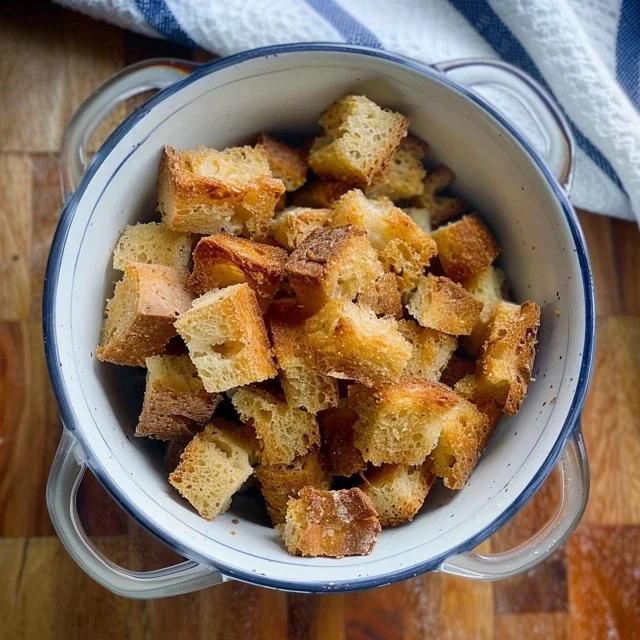
There’s something truly satisfying about preparing a simple snack or garnish that can elevate a meal. This recipe for croutons is an easy way to use up leftover sourdough bread, bringing flavor and texture to salads, soups, or even just enjoying them as a snack. People often appreciate croutons during weeknight dinners, weekend brunches, or while hosting friends. They hold a comforting position in many quiet moments, adding a crunchy element to various dishes. Let’s dive into making them.
Why You’ll Love This Homemade Sourdough Croutons
These croutons offer ease and reliability, making them a favorite in many kitchens. Their satisfying crunch and balanced flavor can complement a variety of meals. With such practical value, you’ll find them a handy addition to your cooking repertoire, whether you’re enjoying a cozy dinner at home or entertaining guests.
Kitchen Tools You’ll Need
- Baking sheet
- Mixing bowl
- Knife
- Cutting board
Ingredients
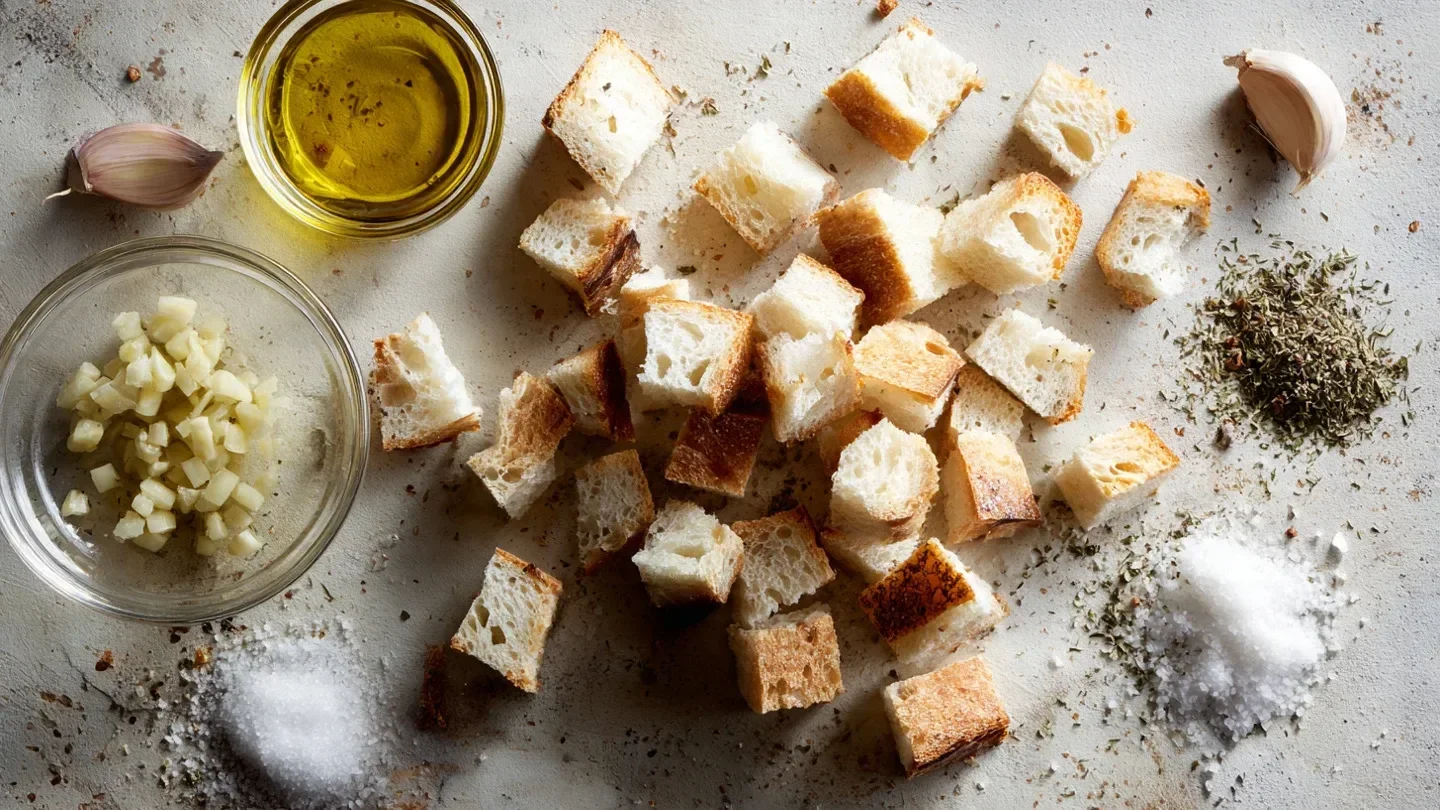
- 6-8 cups cubed sourdough bread at least one day old, or sliced and dried (provides structure and moisture)
- 4 tablespoons olive oil (adds richness and helps in crisping)
- 3 garlic cloves minced (adds a savory flavor)
- ½ – 1 teaspoon kosher salt (enhances overall taste)
- 1 teaspoon dried parsley flakes (adds a touch of herbal flavor)
- ¼ teaspoon black pepper (adds mild heat)
How to Make Homemade Sourdough Croutons
Step 1. Begin by taking your sourdough bread and cutting it into cubes, ensuring they are about ¾ to 1 inch in size. If your bread isn’t at least a day old, you can slice it and let it dry out for a while. The texture of slightly stale bread helps the croutons turn crispy rather than chewy.
Step 2. In a large mixing bowl, combine the cubed bread with olive oil. Stir gently to ensure the oil evenly coats all the bread pieces. This will help achieve a nice golden color while baking and contributes to the overall flavor and texture once they are done.
Step 3. Next, add in the minced garlic, kosher salt, dried parsley flakes, and black pepper to the bowl. Mix everything thoroughly again to ensure the seasonings are well-distributed throughout the bread cubes. This mix of seasonings will enhance the flavor of your croutons.
Step 4. Once the bread is well coated with oil and seasonings, distribute the seasoned cubes evenly on a baking sheet. Make sure they are in a single layer for even cooking. This arrangement helps each piece to crisp up nicely without steaming one another.
Step 5. Now it’s time to bake the croutons. Place the baking sheet in the oven and allow them to bake until they are golden brown and crispy. Keep an eye on them as they bake, stirring occasionally to ensure they brown evenly. The finished croutons should feel dry to the touch and have a satisfying crunch.
Step 6. After baking, remove the croutons from the oven and let them cool on the baking sheet for a few minutes. This cooling period will help them firm up further and finish developing that delightful crunch you want in croutons.
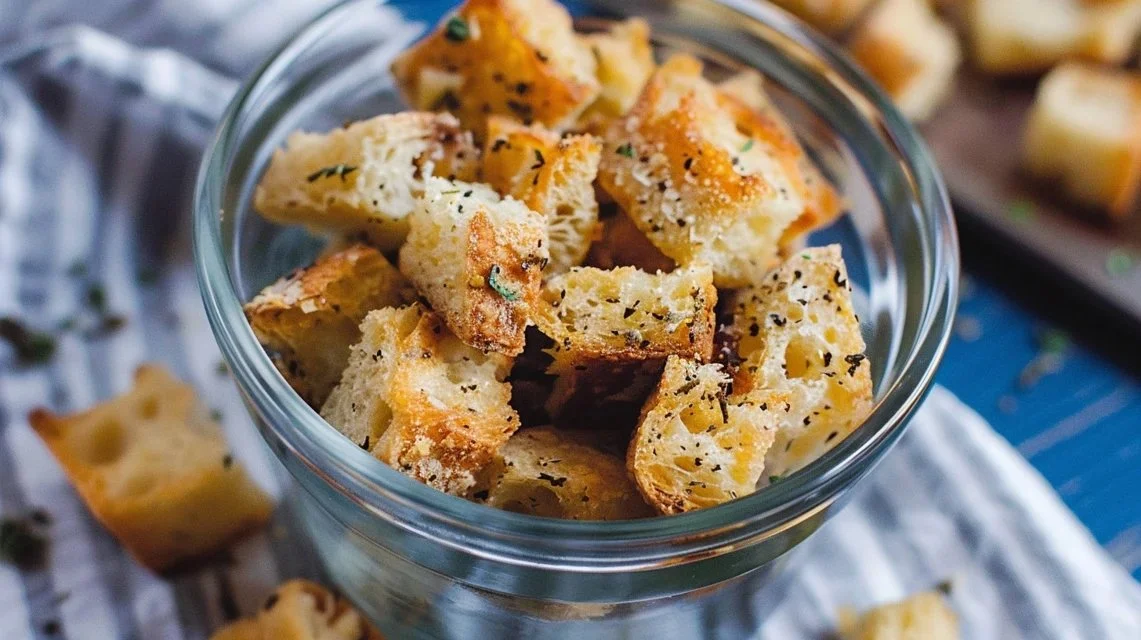
Serving Suggestions
Croutons can serve many purposes in the kitchen. They are great for sprinkling on salads to add texture and flavor. You can layer them in soups for some hearty crunch. They also make for an easy snack that pairs well with dips or on their own. Using leftover croutons in breakfast dishes, like a scrambled egg bowl, can give a satisfying twist.
Pro Tips for Best Results
- Make sure to use day-old or drier bread to achieve the best texture.
- Feel free to adjust the oil and seasoning levels to customize the flavor to your liking.
- Stir the croutons midway through baking for even crisping.
- Store any leftovers in an airtight container to maintain their freshness.
- Experiment with additional herbs or spices if you want to try different flavor profiles.
Common Mistakes to Avoid
- Using fresh bread: Fresh bread retains too much moisture, leading to soggy croutons. Use stale bread or dry it for a better result.
- Overcrowding the baking sheet: If bread cubes are piled together, they will steam instead of crisp. Spread them out in a single layer.
- Not stirring: Failing to stir the croutons during baking can result in uneven browning. Stirring helps achieving an even color and texture.
- Not monitoring closely: Baking times can vary; if unattended, croutons may burn. Keep an eye on them during the last few minutes.
- Ignoring seasoning: Skipping or under-seasoning can yield bland croutons. Proper seasoning enhances flavor and balances textures.
- Not allowing to cool: Skipping the cooling step may lead to sogginess. Letting them cool helps them firm up after baking.
Variations & Substitutions
For a twist, you might consider adding different dried herbs like thyme or rosemary for a unique flavor. If garlic isn’t to your taste, a sprinkle of onion powder can provide an interesting alternative. For a touch of heat, a dash of cayenne pepper can add warmth without overwhelming the flavor profile. Adjusting the type of oil, such as using avocado oil, might give it a different richness, too.
Storage & Reheating
You can store your croutons at room temperature in an airtight container for up to a week. For longer storage, refrigerate them in a sealed bag for freshness, although they might lose some crispiness. Freezing croutons is another option for longer-term storage; just place them in a freezer-safe bag. To reheat, you can pop them in the oven briefly to restore some crunch.
Frequently Asked Questions
Can I make this recipe ahead of time?
Yes, you can prepare croutons ahead of time. They store well in an airtight container, allowing you to have them ready for salads or soups whenever you need.
How long does it last in the fridge?
If properly stored in the fridge, croutons can stay fresh for up to a week. Keeping them in an airtight container helps maintain their texture and flavor.
Can I freeze this recipe?
Absolutely, croutons freeze well. Storing them in a freezer-safe bag can extend their shelf life, making them a convenient option for future meals.
What can I substitute for one ingredient?
If you want to alter the flavor, you could replace olive oil with a different oil, such as avocado oil, which offers a distinct richness while still helping croutons crisp up nicely.
Why didn’t my recipe turn out as expected?
Common reasons might include using fresh bread, overcrowding the pan, or not monitoring the baking process closely. Each of these factors can affect the crispiness and flavor of the croutons.
Final Thoughts
Making sourdough croutons can be a rewarding and practical endeavor in the kitchen. The simplicity of the recipe allows for creativity while producing a crunchy, flavorful addition to many meals. Whether enjoying them topped over a warm bowl of soup or as a snack on their own, they offer a reliable comfort that enhances your dining experience. With a bit of care, you’ll have homemade croutons that are sure to delight those who share a meal with you.
Sourdough Croutons
Ingredients
Main Ingredients
- 6-8 cups cubed sourdough bread at least one day old Provides structure and moisture.
- 4 tablespoons olive oil Adds richness and helps in crisping.
- 3 cloves garlic, minced Adds a savory flavor.
- ½ - 1 teaspoon kosher salt Enhances overall taste.
- 1 teaspoon dried parsley flakes Adds a touch of herbal flavor.
- ¼ teaspoon black pepper Adds mild heat.
Instructions
Preparation
- Cut sourdough bread into cubes of about ¾ to 1 inch.
- In a large mixing bowl, combine the cubed bread with olive oil and stir gently to coat.
- Add minced garlic, kosher salt, dried parsley flakes, and black pepper. Mix thoroughly.
- Evenly distribute the seasoned bread cubes on a baking sheet in a single layer.
- Bake until golden brown and crispy, stirring occasionally.
- Allow croutons to cool on the baking sheet for a few minutes before serving.